If you knew about a problem affecting public health, communities, and local economies throughout the United States, wouldn’t you want your company to be part of the solution? NOAA has teams of scientists developing cutting-edge solutions for national problems, which can be licensed and brought to market by U.S. companies. One such problem is a particularly noxious one – Harmful Algal Blooms, or HABs.
What Are HABs?
In 2014, nearly half a million residents of Toledo, Ohio got an unpleasant alert from their local officials – they were instructed not to drink or use tap water for three days. The cause? Algae in Lake Erie that made drinking water potentially unsafe for consumption.
Algae are a naturally occurring and important part of aquatic ecosystems. Not only do they form the basis of aquatic food chains, they also produce a large share of the oxygen in our atmosphere. So how did algae cause this water ban?
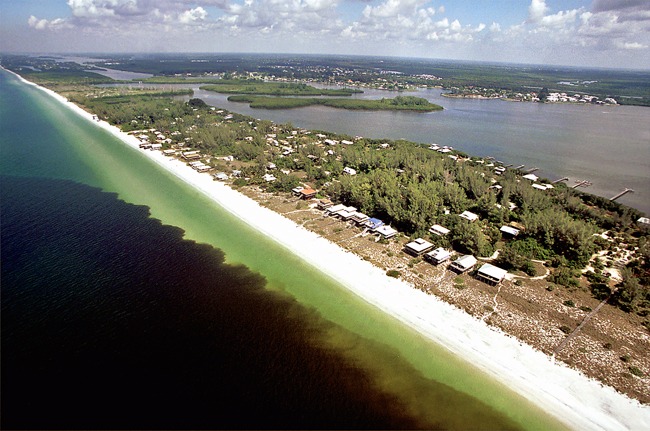
The answer is Harmful Algal Blooms, or HABs. When algae grows rapidly and excessively, it is called a “bloom.” Algal blooms – ranging from “red tides,” to the red, green, or brown sludge-like substance you sometimes see on top of water – can produce toxins invisible to the naked eye. These blooms are harmful because the highly potent toxins of some algae species can cause direct harm to people, animals, fish, and ecosystems. They can also cause indirect harm, such as when blooms decompose and remove oxygen from the water (hypoxia), suffocating fish and other aquatic life. HABs can occur not only in freshwater, but in marine ecosystems as well. For example, Florida’s “red tide” is caused by Karenia brevis, a toxin-producing algae that can kill fish, birds, and other marine animals and cause respiratory problems in humans. Because of the multifaceted nature of the harm caused by HABs, there is a massive opportunity for companies who want to partner with technical experts to help communities and local industries solve the challenges HABs present.
The Harm of HABs
The 2014 HAB in Lake Erie that impacted Toledo’s drinking water was not an isolated experience. HABs occur all over the country, with devastating effects. HAB toxins can contaminate drinking water, cause skin and respiratory irritation, and even lead to illness or death after eating contaminated seafood. They can be fatal to pets, livestock, and dry-land wildlife, and decimate fish populations.

HABs also have major negative economic impacts. For example, in 2015 the U.S. West Coast experienced the largest HAB ever recorded. With algae-produced toxins at record-breaking levels, major fisheries were shut down for weeks to protect consumers. Not only were landings of Dungeness crab (one of the major seafood catches on the West Coast) down $97 million from the previous year, but the fisheries shutdown also had ripple effects across communities. Fisheries closures meant that commercial and recreational fishers could not work, and people lost their jobs. Seafood processors and markets had no product to sell; restaurants, hotels, and stores all lost revenue. The absence of tourists who flocked to the West Coast to dig razor clams resulted in coastal communities losing $40 million in tourism revenue.
It’s hard to accurately gauge the total harm from HABs, because the effects are so widespread. Public health, property values, tourism, the fishing industry, aquaculture, and more are impacted by HABs that occur in oceans, lakes, and other bodies of water across the United States.
Part of the Solution
The economic impacts from HABs are estimated at $10 – 100 million annually in the United States, and more work is needed to fully measure the social impacts. In 1998, Congress recognized the severity of these threats and authorized the Harmful Algal Bloom and Hypoxia Research and Control Act. The Harmful Algal Bloom and Hypoxia Research and Control Amendments Act of 2004 and 2014 reaffirmed and expanded the mandate for NOAA to study HABs and learn how to detect, predict, control, and mitigate HAB events.
While many labs and offices across NOAA assist in addressing the growing HABs challenges in the U.S., NOAA’s National Centers for Coastal Ocean Science (NCCOS) leads the agency’s efforts to mitigate and control HABs. A team of NCCOS scientists have developed four new, groundbreaking technologies that U.S. companies can license to address current gaps in HABs detection and mitigation.
DinoSHIELD
DinoSHIELD is the first environmentally responsible solution for combating active HABs. It bridges the gap between preventive measures and post-bloom mitigation, giving water resource managers a never-before-seen option to target HABs in emergency situations that threaten critical infrastructure or public health.

Hyperspectral Instruments (HABMapper and HyperSPEC)
NCCOS has developed instruments that use data from hundreds of wavelengths of light–hyperspectral to locate or identify harmful algal blooms. The HABMapper is a sensor that can be mounted on drones or other mobile platforms that lets users immediately detect the presence, location, and quantity of harmful or toxic algae in water near beaches or other bodies of water. A drone can fly around a body of water with a HABMapper attached, and the HABMapper will identify the presence of blooms that pose a risk. Small and self-contained, it can be deployed by hand, on a boat, or on a vehicle, and provides real-time HAB information that improves targeted water sampling and leads to better forecasts of human health risk. The HyperSPEC system is a kind of camera that uses machine learning with a hyperspectral imaging system to detect and map HABs. It uses light to examine HABs in a level of detail and clarity never before possible, improving scientists and resource managers’ ability to spot the blooms, figure out the level of risk from their toxins, and predict where and when they will happen.

BloomSCOPE
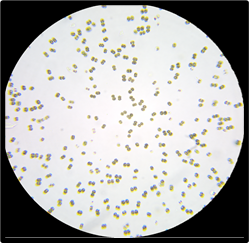
BloomSCOPE is a microscope system designed to quickly detect and identify harmful algae in water. BloomSCOPE uses low-cost hardware to attach smartphones to compound teaching microscopes, and advanced artificial intelligence/machine learning allows BloomSCOPE to use video and high-resolution still images to find algal cells in samples of water.
BloomSCOPE makes water monitoring much more affordable with an initial investment of less than $300 (and no subscriptions/maintenance costs) and much faster, giving results in minutes instead of weeks. It addresses a major gap in current HAB monitoring, especially in smaller bodies of water like reservoirs and ponds that satellite imagery (another way to detect HABs) can miss.
NCCOS marine biologist Kaytee Pokrzywinski, Ph.D., developed HyperSPEC and led the team that developed DinoSHIELD. Rick Stumpf, Ph.D., NCCOS oceanographer, invented the HABMapper sensor. They jointly worked on BloomSCOPE, and are continuing to work to develop new technologies to address the HABs problem.

Working with NOAA
The technologies that Dr. Pokrzywinski and Dr. Stumpf have developed are not just for NOAA use. U.S. companies can also license NOAA technologies and turn them into profitable tools for the greater good. The technologies described above offer critical information to protect public health from contaminated water and seafood, safeguard local economies by preventing devastating impacts on tourism, recreation, commercial fisheries, and help protect critical infrastructure like municipal water supplies.
The market for these systems spans multiple sectors. These include public water utilities vulnerable to HAB contamination, environmental management agencies requiring intervention options, commercial aquaculture operations threatened by HAB events, recreational water managers protecting high-value tourism assets, industrial facilities with water intakes vulnerable to HAB fouling, and waterfront homeowners’ associations.
With the scale of the HABs problem, there is a unique opportunity for U.S. industry to take their technology and deploy it to address the tens to hundreds of millions of dollars in damage that HABs cause across the country.
If you or your company is interested in licensing some of the NOAA HABs technologies, please reach out to NOAAs Technology Transfer Program at noaa.t2@noaa.gov. If you have any questions about the technology presented here, or general questions about HABs, please reach out to HAB@noaa.gov.