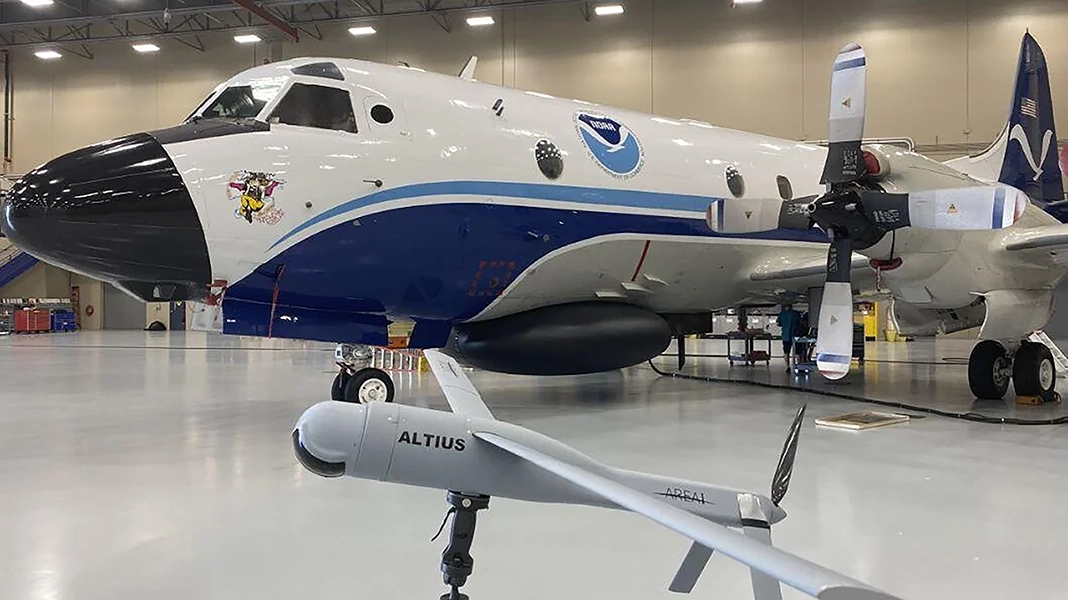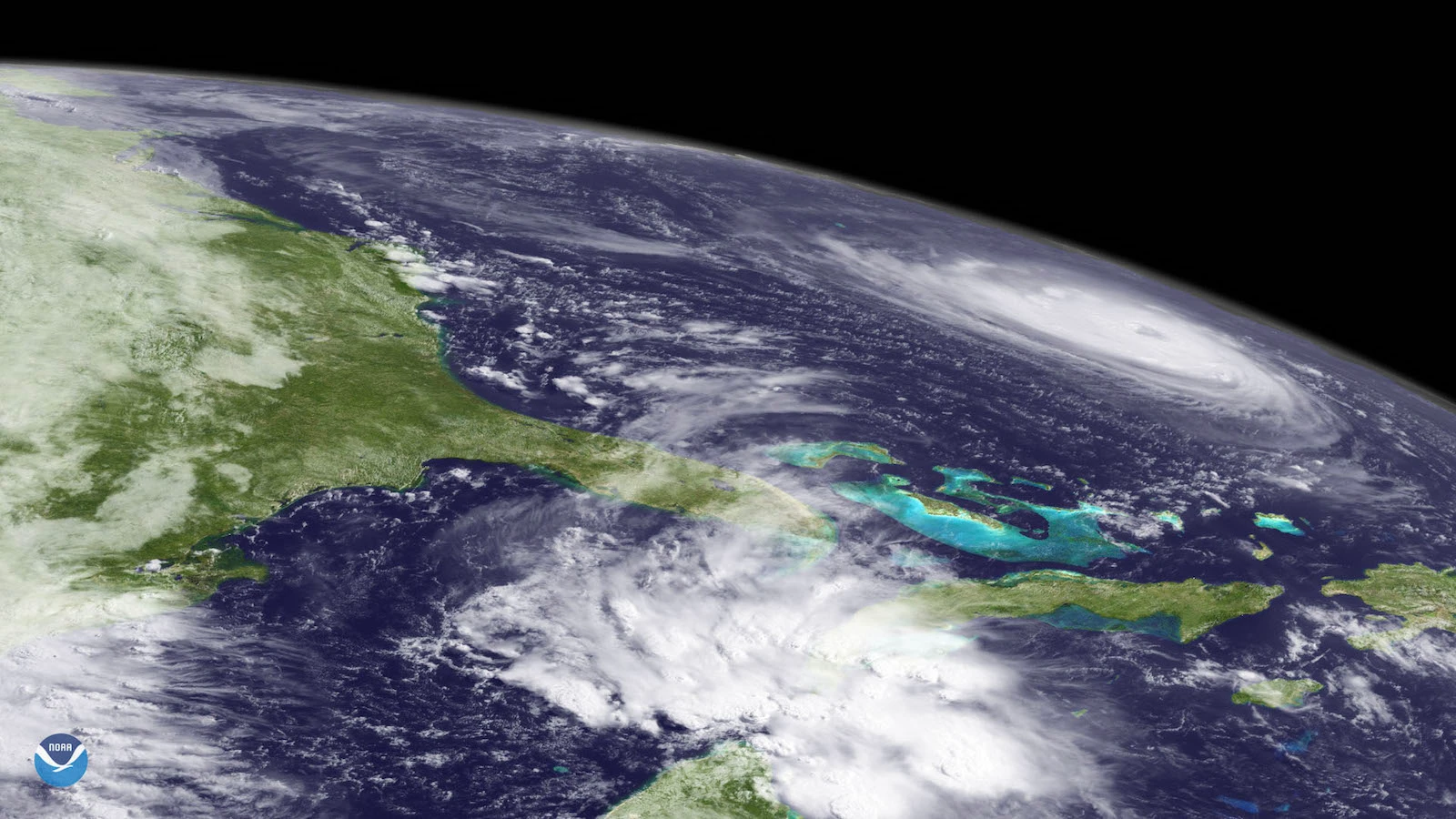
NOAA’s National Hurricane Center (NHC) and Google LLC are teaming up to maximize the benefits of a new artificial intelligence (AI) weather forecast model to advance NOAA’s mission to save lives, mitigate property loss and improve the nation’s economy by…
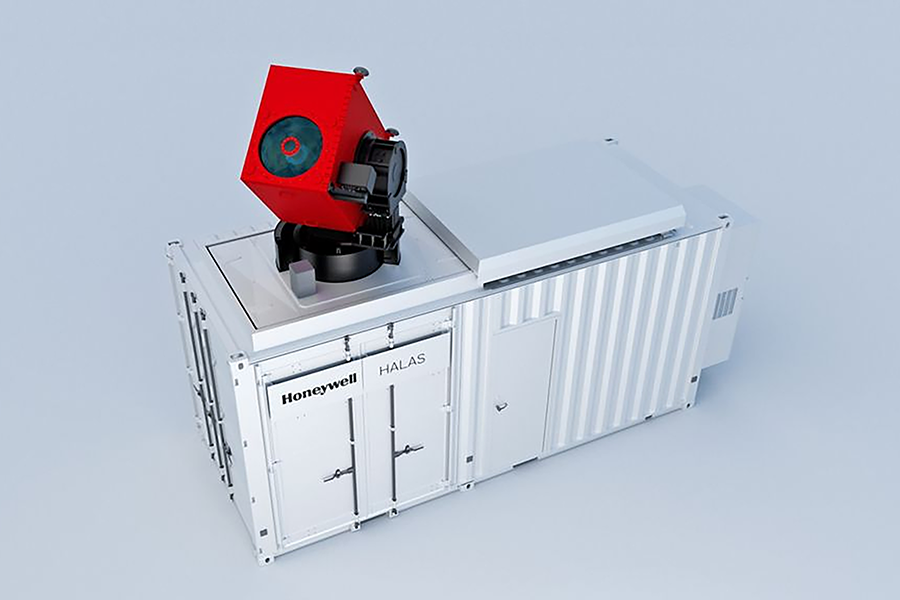
NOAA’s National Weather Service and Honeywell Aerospace Technologies signed a two-year Cooperative Research and Development Agreement to deploy a high-altitude LiDAR Atmospheric Sensing (HALAS) ground system and to evaluate the upper-air data gathered to determine if it could aid in…
NOAA’s Office of Space Commerce and Space Exploration Technologies Corp. (SpaceX) have entered into a no-exchange-of-funds Cooperative Research and Development Agreement (CRADA) for research and development activities related to automated collision avoidance and satellite conjunction assessment screenings.
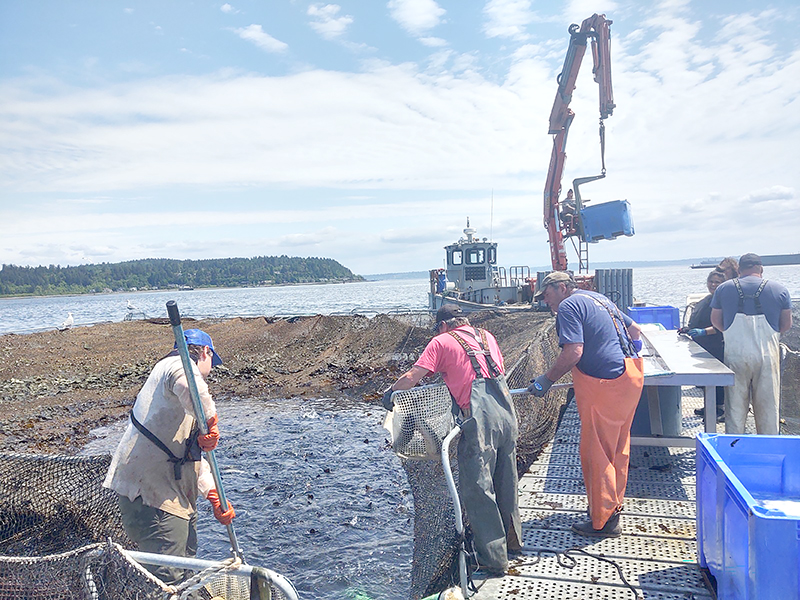
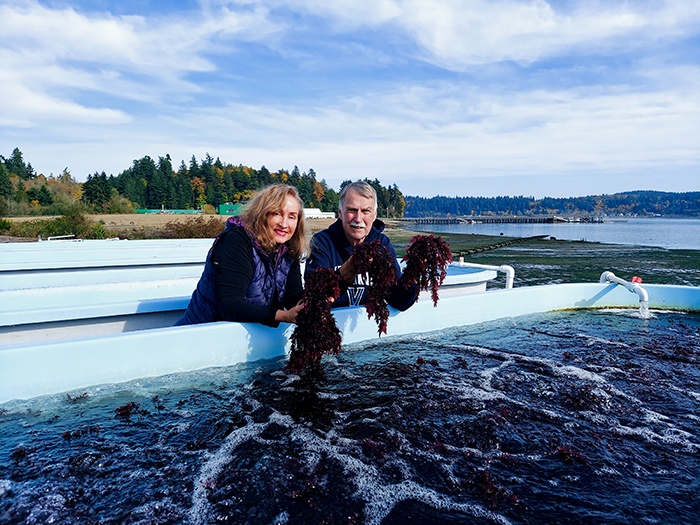
The Jamestown S’klallam Tribe in the U.S. Pacific Northwest has a mantra: “What is done today, can impact seven generations from now.” The spirit of that mantra underlies a unique public-private partnership that has successfully fused science with local Native…
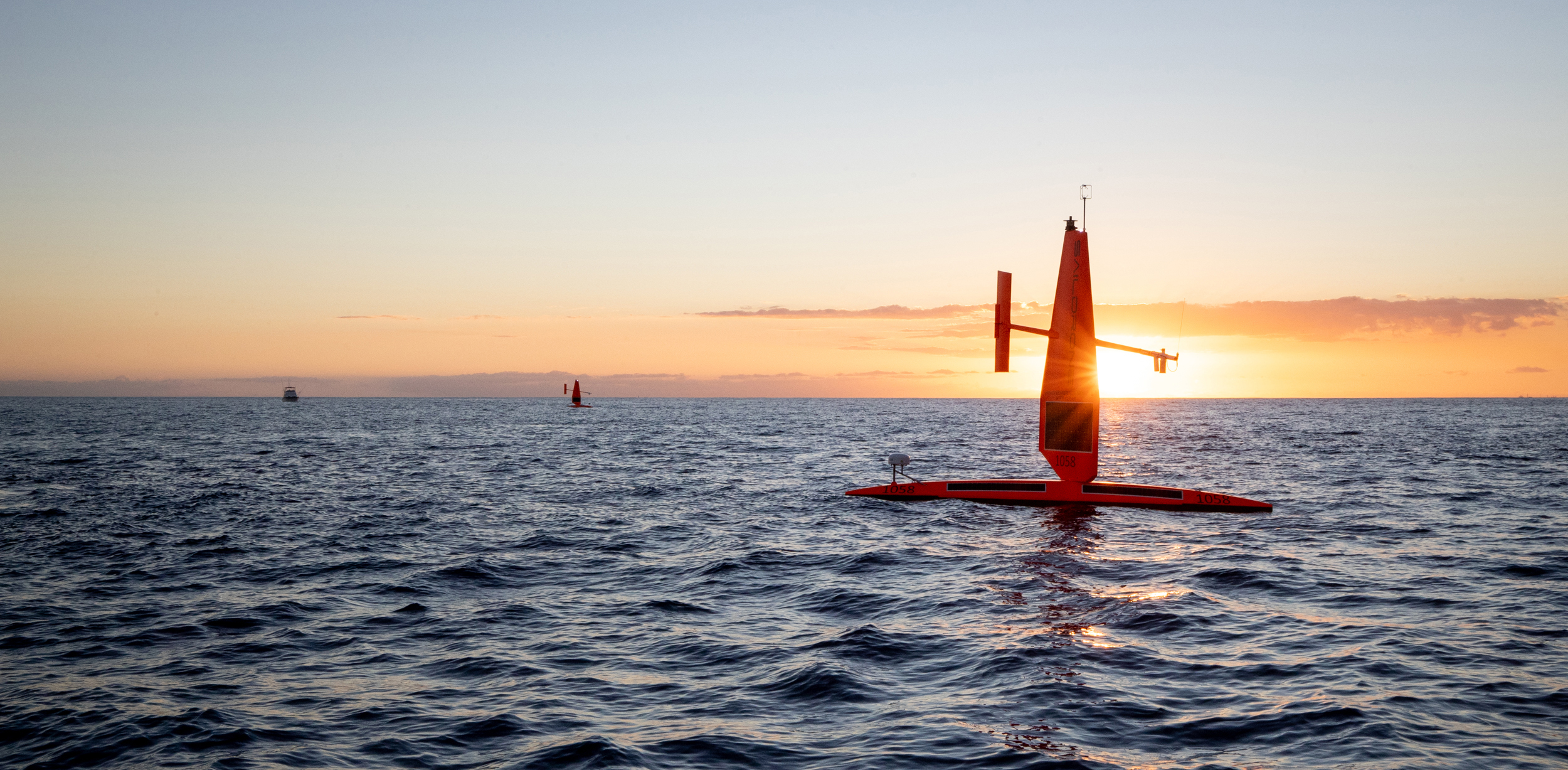
The 2024 edition recognizes NOAA and industry partners for the highest wind speed recorded by an uncrewed surface vehicle and for endurance inside a tropical storm.
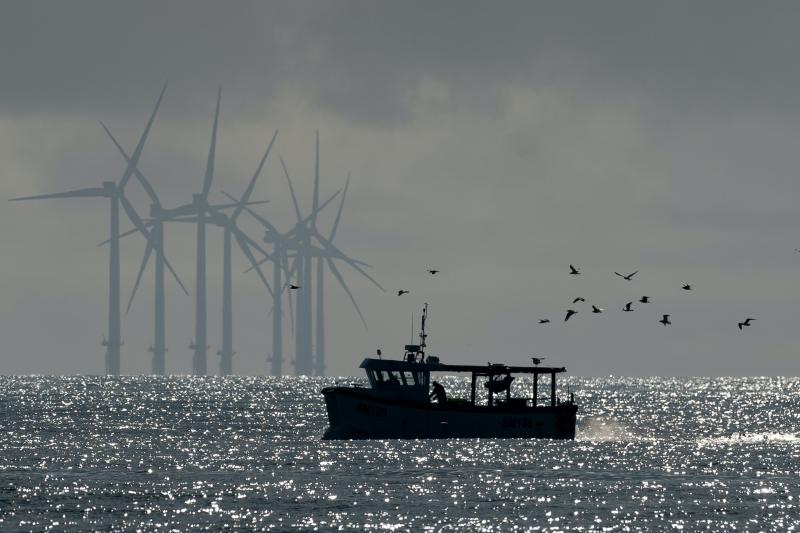
The agreement focuses on informing development of an environmental monitoring program for the offshore wind project off the shores of New York and New Jersey.
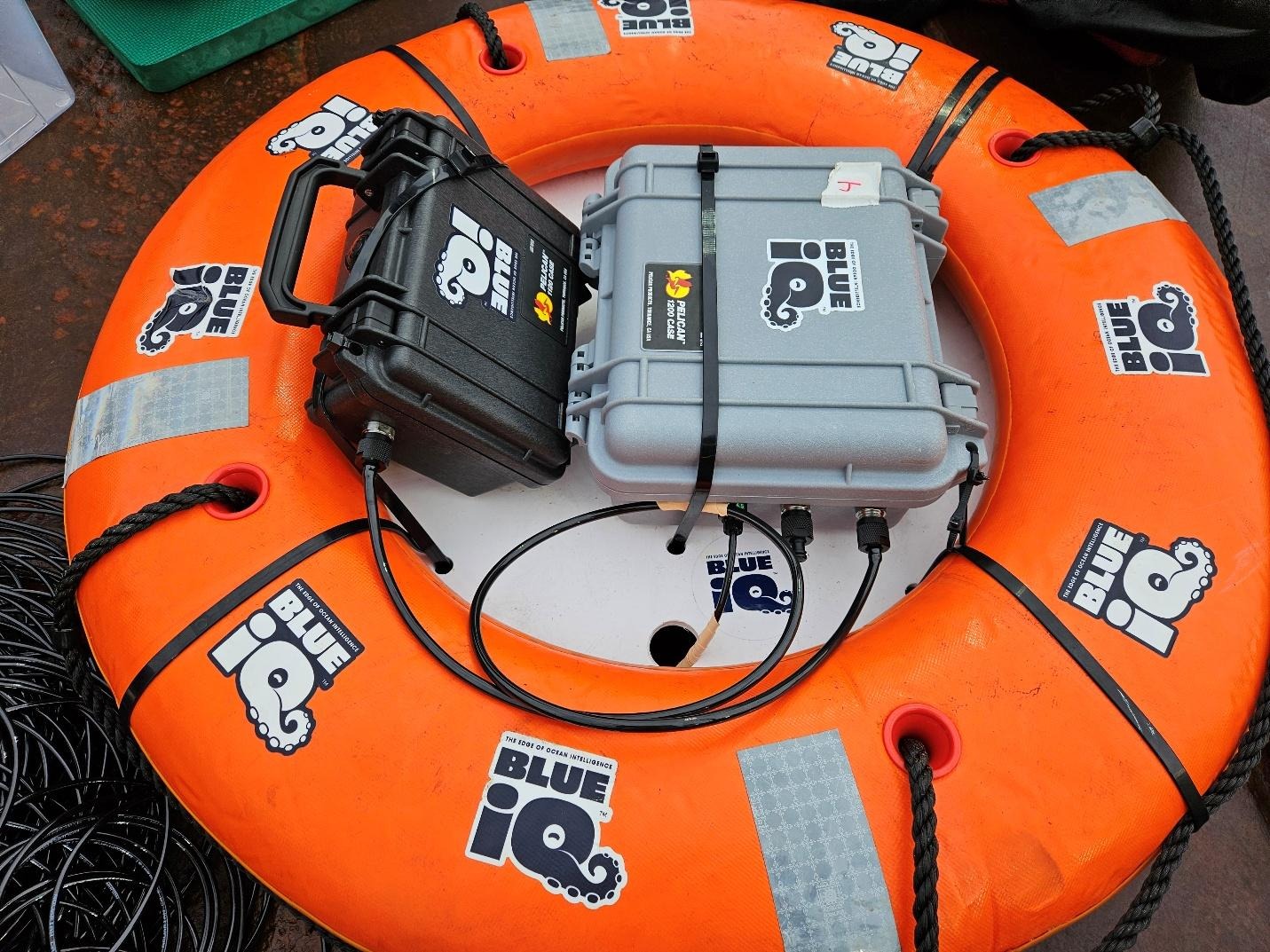
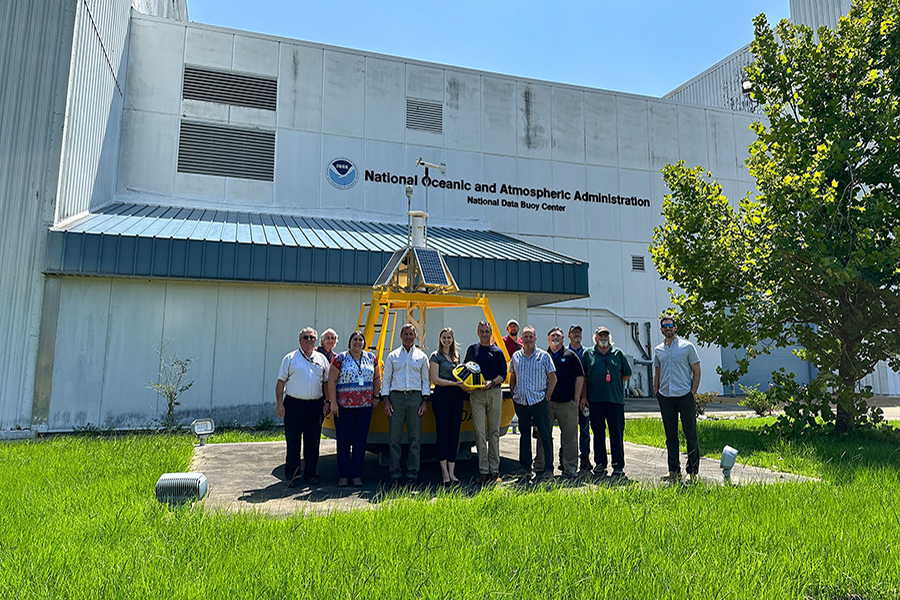
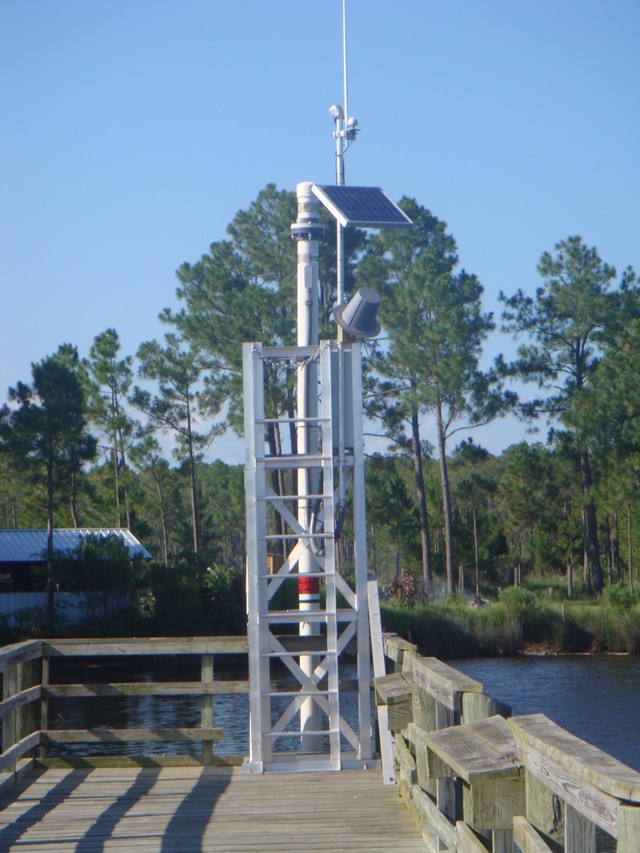
The National Data Buoy Center (NDBC) and Sofar Ocean have signed an agreement to explore potential benefits of co-use of technologies and methodologies by exchanging technical knowledge.
A successful partnership between NOAA and Saildrone, Inc. has expanded to support research missions across agency led to business growth and technological innovation, and contributed to the broader New Blue Economy.
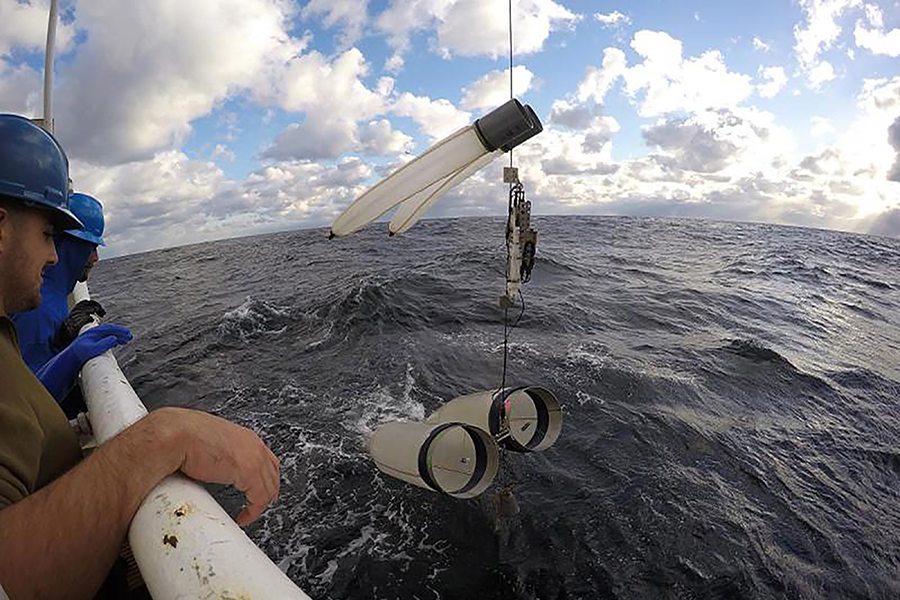
NOAA’s Northeast Fisheries Science Center and the University of Rhode Island have signed a 5-year formal partnership agreement to research how offshore wind energy development will affect marine ecosystems and the people who live near, or work on, the ocean.…
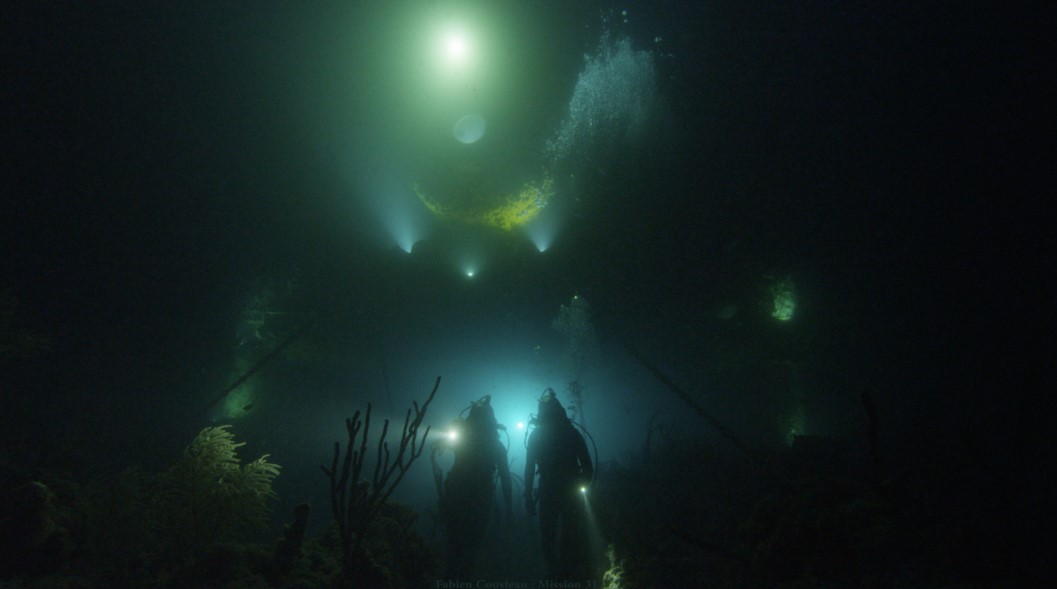
NOAA and the Proteus Ocean Group have signed a formal agreement to use the “underwater space station of the ocean” PROTEUS™ to advance marine science, research, and education, furthering our understanding of the ocean environment and revealing solutions to some…
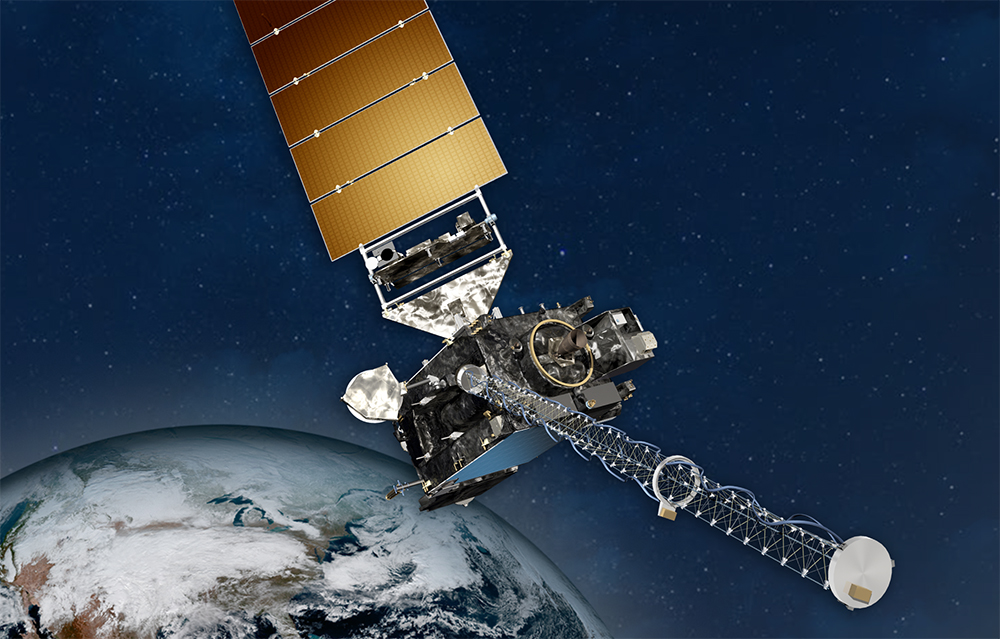
NOAA and L3Harris have entered a formal agreement with the goal of improving technology that will enable NOAA to handle an increase of satellite data expected during the next decade.
Public-private partnerships are vital for bringing private sector innovation and agility to NOAA’s research and development efforts. One of the key tools in NOAA’s partnership toolkit is the CRADA, or Cooperative Research and Development Agreement.
NOAA and Microsoft have forged a formal agreement to harness Microsoft’s cloud computing tools and help advance NOAA’s mission to create a Climate-Ready Nation.
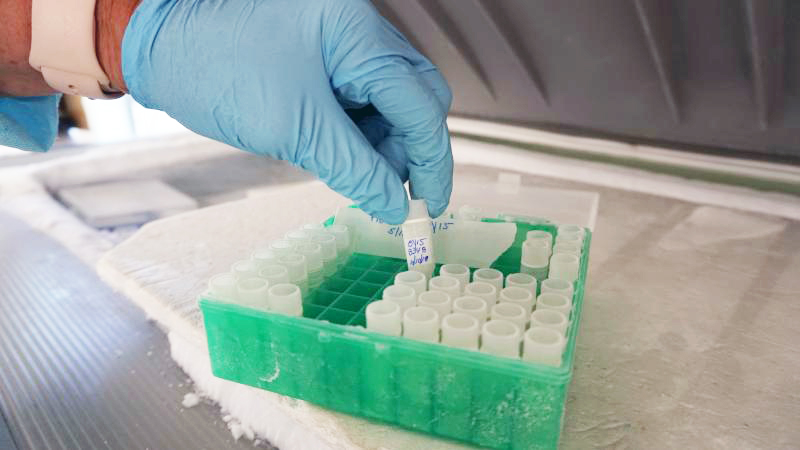
Industry stakeholders offer unique perspectives on the benefits of a NOAA developed oyster probiotic OY15 and the impact it could have on oyster hatcheries worldwide.
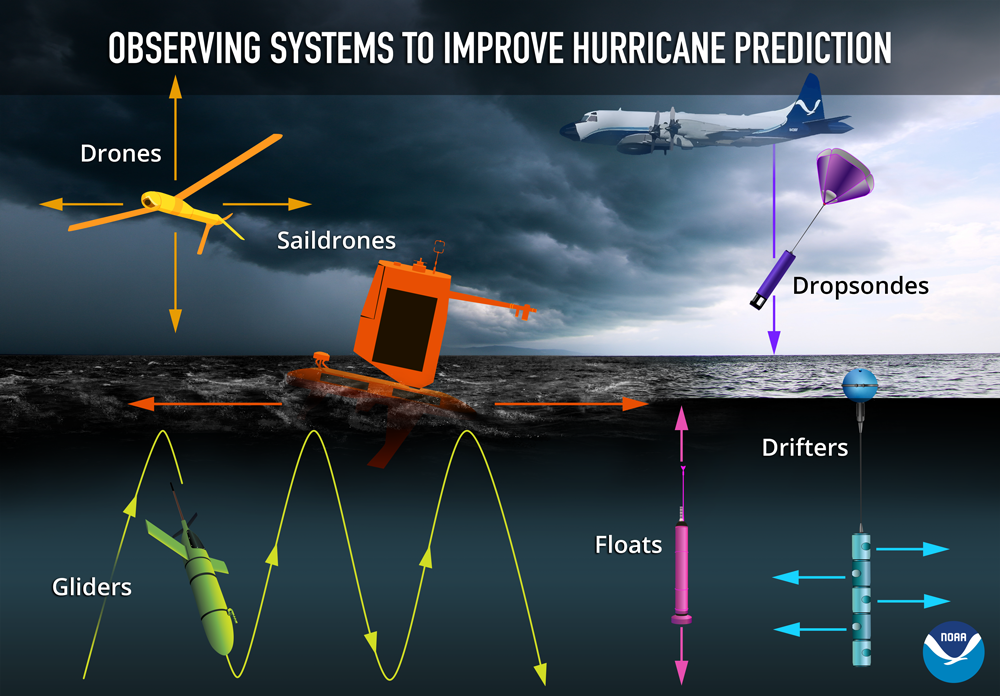
In partnership with NOAA, Saildrone Inc. is deploying seven ocean drones to collect data from hurricanes during the 2022 hurricane season with the goal of improving hurricane forecasting. For the first year, two saildrones will track hurricanes in the Gulf…
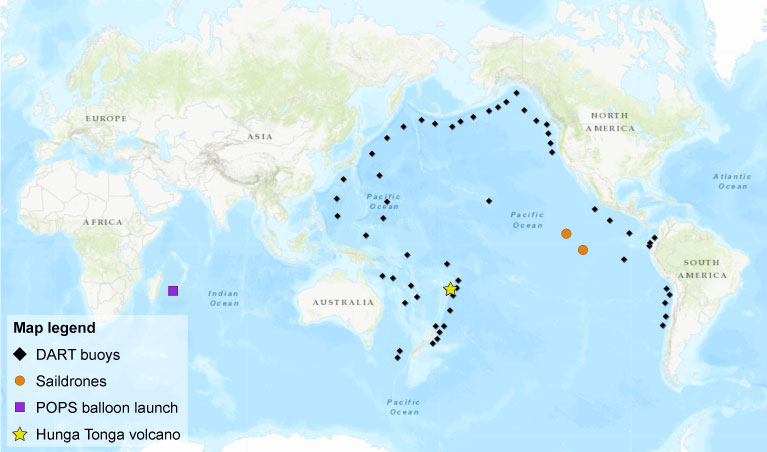
When a volcano in the South Pacific Ocean erupted in January 2022, NOAA researchers were well-equipped to study the multi-hazard event by sky and by sea. Key technologies and strategic partnerships made it possible for NOAA to issue warnings that…
Collaboration designed to improve response to coastal climate risks. NOAA and climate analytics company, Jupiter Intelligence, signed a formal agreement to advance understanding of coastal ecosystems, precipitation and water level predictions. The goal of the partnership is to support community…
NOAA laboratories regularly partner with private sector companies to conduct work that is mutually beneficial and helps to accomplish the NOAA mission.
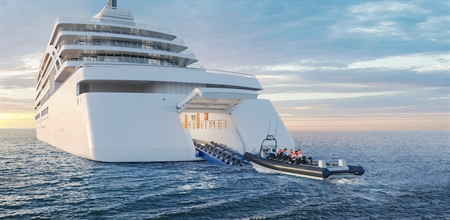
NOAA plans to expand its research in the Great Lakes region as the agency teams up with the travel company Viking to carry scientists aboard new expedition voyages planned to begin in 2022.
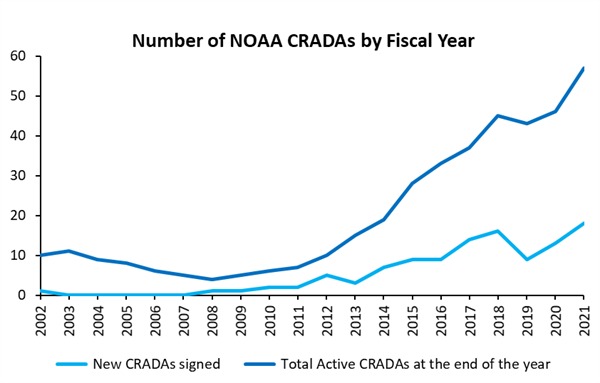
A record number of NOAA Cooperative Research and Development Agreements in 2021 has generated scientific and economic benefits Research partnerships are increasingly important as scientists work to address complex global problems like coastal resilience, food security, and climate change.
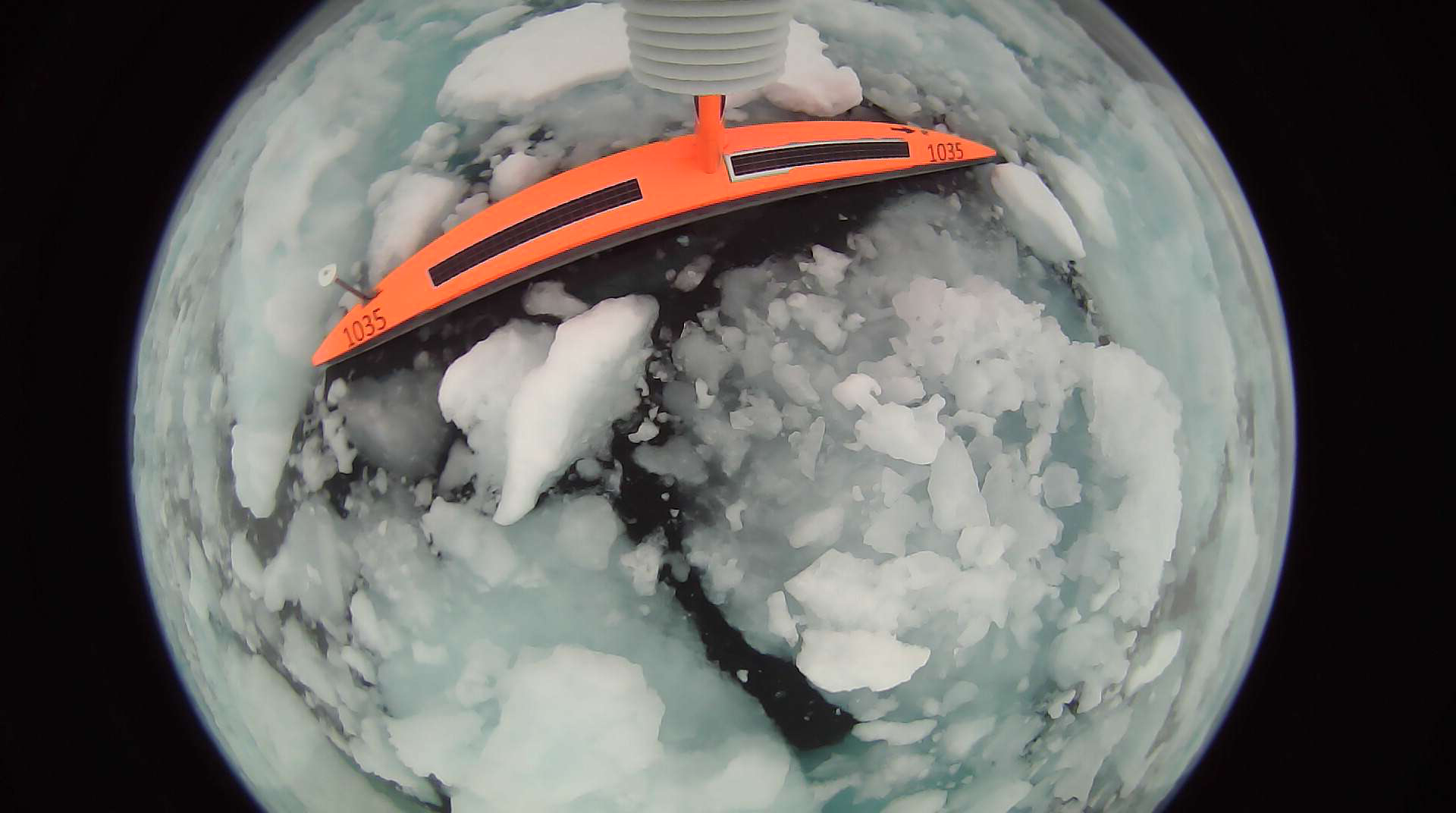
NOAA PMEL researchers sent ocean drones to the U.S. Arctic to test their remote navigation capabilities close to ice and to collect data on Arctic weather, climate, and ecosystems. The saildrones were equipped to observe oceanic and atmospheric variables that…
Protecting and exploring our global ocean is a huge job: It covers more than 70 percent of Earth’s surface. Cutting-edge technologies help us dive deeper, gather more ocean data and solve some of its biggest challenges. Here are 5 innovative…
Mayday.ai applies artificial intelligence to NOAA satellite imagery to detect natural disasters, starting with wildfires Story originally published on Environmental News Network In 2017, as Kian Mirshahi watched wildfires rage across his home state of California, he wondered if there…