
Official websites use .gov
A .gov website belongs to an official government organization in the United States.

Secure .gov websites use HTTPS
A lock ( ) or https:// means you’ve safely connected to the .gov website. Share sensitive information only on official, secure websites.

NOAA Patented Technology

Listing of NOAA’s patented technologies past and present.

A black drone with an orange base set on a beach.

HABMapper

Background When algae grows rapidly and excessively, it is called a “bloom.” Algal blooms can produce toxins invisible to the naked eye. These blooms are harmful because the highly potent toxins of some algae species can cause direct harm to people, animals, fish, and ecosystems. They can also cause indirect harm, such as when blooms decompose and remove oxygen from the water (hypoxia), suffocating fish and other aquatic life. HABs can occur not only in freshwater, but in marine ecosystems as well.  HAB toxins can contaminate drinking water, cause skin and respiratory irritation, and even lead to illness or death after eating contaminated seafood. They can be fatal to pets, livestock, and dry-land wildlife, and decimate fish populations. Because of the multifaceted nature of the harm caused by HABs, there is a massive opportunity for companies who want to partner with technical experts to help communities and local industries solve the challenges HABs present. Summary of the Invention HABMapper is a sensor that uses data from hundreds of wavelengths of light to locate or identify harmful algal blooms. It can be mounted on drones or other mobile platforms that lets users immediately detect the presence, location, and quantity of harmful or toxic algae in water near beaches or other bodies of water. A drone can fly around a body of water with a HABMapper attached, and the HABMapper will identify the presence of blooms that pose a risk. Small and self-contained, it can be deployed by hand, on a boat, or on a vehicle, and provides real-time HAB information that improves targeted water sampling and leads to better forecasts of human health risk. Licensing Information NOAA is seeking qualified licensees to manufacture and sell this technology, which is patent pending in the United States.  Interested parties should contact the NOAA TPO at noaa.t2@noaa.gov for more information. 

HABMapper Read More »

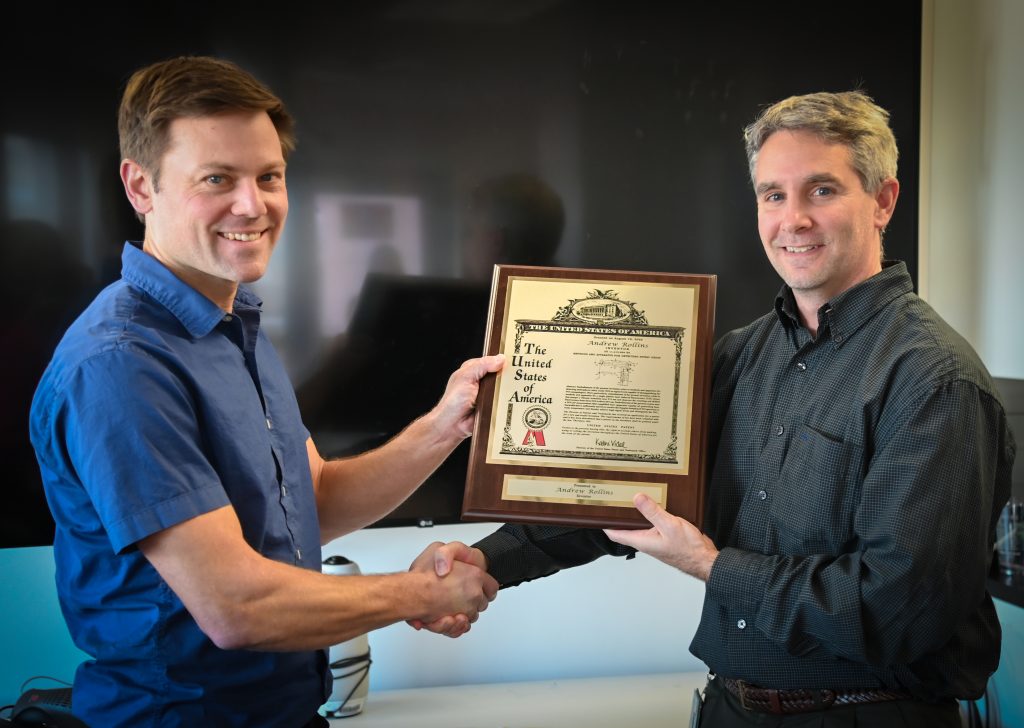
two men shake hands and display a plaque

NOAA scientist’s patented design expands the limits of atmospheric research

The new instrument is smaller, lighter and much more sensitive to low concentrations of nitrogen oxides. NOAA scientist Andrew Rollins was awarded a U.S. Patent for his innovative design in August 2022.

NOAA scientist’s patented design expands the limits of atmospheric research Read More »
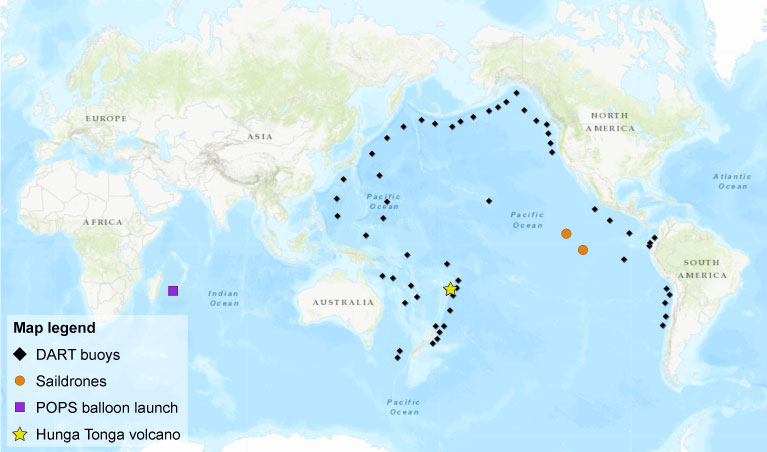
world map with locations highlighted across Pacific Ocean and Indian Ocean

Eruption highlights how NOAA technological innovation powers public safety, economic development, and scientific discovery

When a volcano in the South Pacific Ocean erupted in January 2022, NOAA researchers were well-equipped to study the multi-hazard event by sky and by sea. Key technologies and strategic partnerships made it possible for NOAA to issue warnings that saved lives around the world, while also collecting scientific data that will improve forecasting models and disaster response for future events.

Eruption highlights how NOAA technological innovation powers public safety, economic development, and scientific discovery Read More »